One of opera’s greatest works, The Marriage of Figaro is the first of three collaborations between Mozart and librettist Lorenzo Da Ponte (followed by Don Giovanni and Così fan tutte).
A masterpiece of “opera buffa” based on the 1784 play by Beaumarchais, this raucous satirization of the aristocracy depicts servants Figaro and Susanna on their wedding day as they outwit their entitled employer in a whirlwind of general pandemonium.
The play attracted such enormous crowds that Louis XVI considered it dangerous; Napoleon later called it “the Revolution already in action.” Although Da Ponte had to dilute the libretto to get it produced, the opera’s lampoon of the upper class still stings true today.
The production was originally created by Opéra de Montréal.
2025 Performances
Sept. 27, Oct. 3 Musical Arts Center 7:30 PM
Sept, 28 Musical Arts Center 3 PM
Oct. 4 Musical Arts Center 5 PM
Join us an hour before each performance for the Opera Insights Lecture, located in the North Lobby of the Musical Arts Center.
Director Crystal Manich shares insights on bringing The Marriage of Figaro to life and the timeless appeal of Beaumarchais’ clever everyman. Hear how her approach balances comedy, drama, and youthful energy in this iconic opera.
Synopsis and Program Notes
Act I In anticipation of his pending marriage, Figaro is measuring his room, which the Count has provided, for a bed. Susanna hints to Figaro that the Count expects the droit du seigneur (a nobleman’s privilege to spend the wedding night with the bride of any of his servants) that he had only recently abolished. The two determine to prevent it. Marcellina enters and enlists the help of her master, Don Bartolo, claiming that Figaro must repay an old debt or marry her as he had promised. Cherubino, a young page boy, confides his love for the Countess to Susanna but must hide when the Count arrives to press his affections on Susanna. They, in turn, are nearly discovered by Basilio. The Count angrily emerges from his hiding place when he overhears Basilio speaking of Cherubino’s interest in the Countess. Cherubino himself is discovered but is spared for the moment as Figaro and his fellow servants enter the room in order to publicly persuade the Count to marry him and Susanna immediately. The Count cleverly delays the actual wedding and then gives his nemesis, Cherubino, an unwelcome commission in the Count’s regiment.
Act II The Countess regrets her husband’s wandering affections. Susanna and Figaro plot with her to rouse the Count’s jealousy. He is to learn about a rendezvous between his wife and another man. And Cherubino, disguised as Susanna, will accept the Count’s own advances.
While Susanna and the Countess discuss how best to disguise Cherubino, the Count arrives. So Susanna and Cherubino must hide: she behind some furniture, and he in the closet. The Count is very suspicious, and when the Countess refuses to let him in the closet, he leaves to find means to break in. This allows Cherubino to escape by jumping out the window, and Susanna is left in the closet to be discovered by the Count. The situation is again complicated when Antonio enters to report that a man just jumped out of the window into the garden. Figaro claims responsibility, but Antonio’s discovery of Cherubino’s commission papers needs explanation. The Count becomes satisfied that Figaro brought them to obtain the proper seals. At this point, Marcellina enters to demand her due from Figaro.
Act III The Count and Susanna meet. He becomes sure of her compliance with his desires and she of Figaro’s success in the trial. But, overhearing Susanna’s confidence, the Count decides in Marcellina’s favor. However, it is immediately revealed that Marcellina is, in fact, Figaro’s mother, and Bartolo is his father. Figaro and Susanna can be married at long last.
The Countess has Susanna write a note to the Count and decides to disguise herself for the evening’s encounter. Cherubino turns up again in the crowd of peasant girls paying their respects to the Countess prior to the wedding. During the festivities, Susanna delivers the note to the Count.
Act IV Barbarina has lost the pin she is to return to Susanna, a confirmation from the Count of the evening’s meeting. Figaro hears her, believes the tryst to be in earnest, and determines to trap his new wife. Everyone arrives in the garden for the intended tryst. In the confusion of deceits and recognitions, the Count begins trifling with Susanna (the Countess) and Figaro with the Countess (Susanna, a ruse he is aware of). Observing the latter, the Count calls out to expose his wife’s faithlessness, but the trick is on him. The Countess forgives him, and the whole company rejoices.
“Heart and the Old World in The Marriage of Figaro” by Crystal Manich
I have always believed that opera should not exist in a box. As a living, breathing art form, it, like Shakespeare, must be adaptable to the climate of “now” and resonate with a contemporary audience by extracting the universal themes that are inherent to the work. Having directed dozens of standard repertoire operas, I believe that telling a story is as simple as exploring the myriad of possibilities that exist on the page—and comedies are ripe for the task.
Figaro, based on the Beaumarchais play, portrays social themes within a misogynistic world on the cusp of great change. Mistaken situations and identities juxtaposed against would-be love triangles are the perfect recipe for comic social commentary. Beaumarchais’ view of pre-French Revolution class structure, and the frivolity of the upper class in particular, is why the story is a timeless cautionary tale of power and lust. It is also about matters of the heart, forgotten and revived.
The core of Figaro consists of the complexities and consequences of antique class structures. It particularly examines the possibility of redemption through the Count, a man with absolute power usurped by his servants with the help of the Countess, who, ever steadfast, longs to regain her husband’s affections. The Count’s lesson is to recognize that he’s been vainly searching for the very thing he already possesses: love.
Whose Le nozze di Figaro?” by John Matthew Cowan Ph.D. Student in Musicology
Whose Le nozze di Figaro? W. A. Mozart’s, of course—his name alone can make anything fetch millions at Sotheby’s. Lorenzo Da Ponte deserves credit too; it was this bon vivant who penned the librettos for the now-canonical triumvirate of Figaro (1786), Don Giovanni (1787), and Così fan tutte (1790). It is also him we can thank that we experience Figaro today in the United States, as his short-lived Italian opera house in 1830s New York City planted the seeds for the Metropolitan Opera. There is also a case for triple authorship: Without P.-A. C. de Beaumarchais’ Le mariage de Figaro (1778), there would be no operatic adaptation.
Yet in common parlance, Figaro belongs to Mozart; he is seen as the singular creative force, the auteur. That auteurist frame—born of twentieth-century French film directors like François Truffaut but more familiar to us as later applied to Martin Scorsese or Stanley Kubrick—saw backwards application to opera composers via the earlier notion of the “Romantic genius.” The composer, like the director, appears as the visionary, uniting drama and music. This view hardens into ideology: A masterminded musical coherence equals artistic genius. This auteurist model finds its anachronistic apex in Richard Wagner; his cultivation of the Gesamtkunstwerk (“total work of art”) became a sun around which later understandings of earlier composers of opera began to orbit. Thus Mozart becomes the protoplasmal primordial atomic globule of Wagner, his operas retrofitted as unified artworks, precociously modern in dramatic shape and psychological coherence.
How much input did Mozart have over a libretto? Did he bend Da Ponte’s librettos to his will? Was he the “hand of reason” when working with Emanuel Schikaneder on Die Zauberflöte (1791)? Perhaps, but before Mozart put pen to paper, Da Ponte had reshaped Beaumarchais’ five‑act play to satisfy Emperor Joseph II’s censorship and the structural conventions of opera buffa, compressing it into four acts whose second‑ and fourth‑act finales function as the genre’s customary two climactic act endings. In a letter of November 11, 1785, to his daughter Nannerl, Leopold Mozart reports that his son was being urged to finish Figaro by imperial theater manager Count Orsini-Rosenberg—likely because W. A. was spending too much time disputing with the librettist to get the text as he wanted. Other family correspondence suggests W. A.’s quarrels with librettists usually concerned words or phrases rather than entire dramatic or structural situations.
As musicologist John Platoff puts it: “We find Mozart’s solutions astonishing in part because we cannot begin to see how they were arrived at.” By relearning the modi operandi of opera buffa, Platoff argues, we can better understand how Mozart and Da Ponte deviate. Let us put this inside baseball into practice: Take the Act II recognition scene in Figaro, where Susanna emerges from the closet—not Cherubino, as the Count had feared. It is a thoroughly hackneyed scenario in eighteenth-century opera: mistaken identity, reveal, stunned reaction. Conventionally, the character being recognized would sing a brief solo, followed by a canned tutti. Da Ponte provides Mozart with a different situation: The Count and Countess react to Susanna before she mocks the Count with her courtly minuet. From there, Mozart elides the surprise into a period of suspended animation over a sustained G bass. Rather than a shock tutti, we float in an exquisitely awkward lull until the Count snaps out of the suspense and into inquiry.
The present-obscurity of many eighteenth-century operas masks the fact that works like Figaro were conceived in relation to them as replies, refinements, or even rebuttals within an operatic conversation. An important predecessor is Giovanni Paisiello and Giuseppe Petrosellini’s Il barbiere di Siviglia (1782). Based on Beaumarchais’ first entry in the Figaro trilogy, it was a pan-European success that ran for at least 100 performances in Vienna. The Mozart family knew Paisiello well, meeting him in 1770 and 1771. Mozart played Paisiello sonatas in his 1781 competition against Muzio Clementi, and in a March 23, 1783, Burgtheater concert, he offered variations (K.398) on Paisiello and Giovanni Bertati’s “Salve tu, Domine” from I filosofi immaginarii (1779). By 1784, the two composers met once more in Vienna. There can be no doubt that Mozart knew Il barbiere well, and so did Viennese audiences. Il barbiere was in the repertory of the Viennese company in the season Figaro was created, and the Burgtheater managed to put them on consecutive opera nights several times that year.
Therefore, musicologist Daniel Heartz positions Mozart’s score as a riposte to Paisiello’s. Heartz, for example, reads the Countess’s “Porgi amor” (II.10) as set in deliberate competition with Rosina’s “Gusto ciel” (II.11) from Il barbiere—the two share the same key, meter, tempo, rhythmic and harmonic pacing, wind coloration, chromatic inflections, and even the messa di voce on B-Flat. The crucial connection is that, through intervening marriage, Il barbiere’s Rosina has become Figaro’s Countess.
It was not uncommon for star singers to create roles in the operas of many different composers. In the 1780s, Vienna’s leading basso buffo was Francesco Benucci, who, in the Mozart-Da Ponte trio, would create the roles of Figaro, Leporello (in Vienna), and Guglielmo. He had earlier created Bartolo in Il barbiere, who, in Heartz’s view, is transferred to the duped Figaro: now likewise given an E-Flat major moderato patter aria perhaps modeled on Bartolo’s, complete with matching meter, tempo, and patter (Bartolo’s “Veramente ho torto” (I.9) and Figaro’s “Aprite un po’” (IV.26)). “He is indeed his father’s son in this,” writes Heartz, “in this, his lowest moment, there is a delicious irony in the family resemblance.” That potential borrowing works on multiple levels: as a continuation of the buffo patter tradition, as a vehicle for Benucci’s signature delivery, and as an intertextual echo of Il barbiere.
As musicologist Mary Hunter argues, Mozart and Da Ponte must be seen in a broader ecosystem of collaboration, compromise, and convention. In short: A composer or librettist alone does not an opera make. Recent scholarship has uncovered a collaborative tangle of librettists, performers, censors, stagehands, impresarios, patrons, and audiences who all had their say in the production of operas. Furthermore, Mozart and Da Ponte inherited a morphology of plots, archetypes, and forms. That they worked within a system of expectations does not diminish their achievements, however. And, I would argue, the point is not that they “did it better.” This duo, in my view, did some things differently and made choices that many value as better, more interesting, or more rewarding—for reasons tied to centuries of discourse over the ever contentious and elusive “taste.”
We tend to absorb the Mozart-Da Ponte operas (and Zauberflöte) into the long nineteenth century, reading them through the lens of opera as drama—in critic Joseph Kerman’s sense—when their aesthetic sensibility often embraced convention and artifice over daring originality and dramatic verisimilitude. Much mid- to late eighteenth-century music entered into an aural world of agreed-upon melodic, harmonic, and phrase structures as creators and listeners shared a repertoire of familiar, easily processed patterns akin to a musico-courtly etiquette. Opera buffa, likewise, trafficked in stock musical and dramatic moves that could be subverted or played straight.
Sometimes these various forms of shared constructions crop up to remind us that no work exists in isolation. A secondary theme in the first movement of Giuseppe Demachi’s now‑obscure Sinfonia in E-Flat (1770s?), for example, uncannily resembles the military march of “Non più andrai” (I.9); it too, unsurprisingly, is carried by woodwinds. Furthermore, Bartolo’s rage aria, “La vendetta” (I.4), has a “cursing” harmonic schema that Arthur Sullivan, with W. S. Gilbert, would lift and give to Katisha in her rage aria during the Act I finale of The Mikado (1885)—helped along by the fact that Sullivan was lead editor at Boosey & Hawkes publishers for all of Mozart’s opera buffas. The former is a coincidence of shared stylistic norms—the latter, a deliberate continuity of comic‑opera musical rhetoric across centuries and national borders.
So, whose Figaro is it? Pedantically, Mozart and Da Ponte’s, after Beaumarchais. In the Barthian sense, yours—you create your own as you experience it. But most usefully, it is ours—an opera layered by centuries of participation: first by censors, librettists, patrons, composers, and singers; later by scholars, editors, directors, and audiences. If we ask not whose Figaro, but how it works, and why it still does, we begin to appreciate its heterogeneous nature: Mozart, yes, but also Da Ponte, Beaumarchais, Paisiello, Petrosellini, Benucci, Joseph II, Orsini-Rosenberg—and even, anachronistically, Demachi and Sullivan. If you want to get inside opera, the trick is to listen for all of them.
Artistic Staff
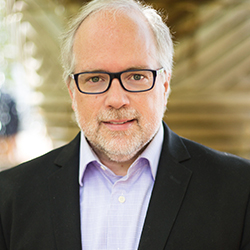
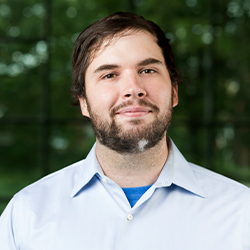
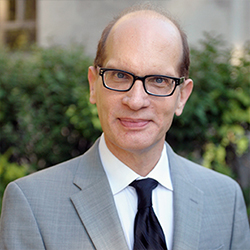
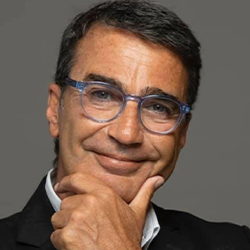
Kevin Murphy is professor of music in collaborative piano and director of coaching and music administration for IU Jacobs School of Music Opera Theater. A leading figure in the world of classical vocal music, he has served as Jacobs faculty since 2011. In 2011, he was appointed director of the program for singers at Ravinia’s Steans Music Institute, and 2013-14 marked his first season as artistic consultant for the Tucson Desert Song Festival. Previously, he was director of music administration and casting advisor at New York City Opera (2008-12) and director of musical studies at the Opéra National de Paris (2006-08). Murphy was the first pianist and vocal coach invited by Maestro James Levine to join the prestigious Lindemann Young Artist Program at the Metropolitan Opera, and from 1993 to 2006, Murphy was an assistant conductor at the Met. In addition to his on- and off-stage partnership with his wife, soprano Heidi Grant Murphy, Murphy has collaborated in concert and recital with numerous world-renowned artists. He is sought after and respected for his work as a private vocal coach and teacher and has guest taught at San Francisco Opera’s Merola Program, the International Vocal Arts Institute in Israel and Italy, Glimmerglass Opera, Tanglewood, Cincinnati Conservatory of Music, and The Juilliard School. In addition to playing and teaching, Murphy has added conducting to his musical activities and is a frequent adjudicator for competitions, including the Metropolitan Opera National Council Auditions, where he has also served as official accompanist on stage at the Met. A native of Syracuse, New York, Murphy earned a Bachelor of Music in Piano Performance degree from Indiana University and a Master of Music in Piano Accompanying degree from the Curtis Institute of Music.
Puerto Rican director Crystal Manich has directed over 90 productions in opera, plays, musical theater circus, and film across the United States, Argentina, Europe, the Middle East, and Australia. Previous productions at the Jacobs School of Music include Puccini’s La Rondine and the world premiere of Anne Frank. Delving into digital media, she directed the world-premiere opera The Copper Queen as a Western thriller feature film for Arizona Opera, which garnered her an award for Best First-time Female Filmmaker at the 2021 Toronto International Women Film Festival. She also directed a multi-cam livestream of Catán’s Spanish-language opera La Hija de Rappaccini for Chicago Opera Theater at the Field Museum, for which she was nominated for a Chicago Emmy. Manich was the cofounding artistic director of Opera Omnia and served as artistic director of Mill City Summer Opera in Minneapolis. She toured as an artistic director with Cirque du Soleil. Her first libretto, Time to Act, with music by Laura Kaminsky, will premiere at Pittsburgh Opera in the 2025-26 season. Manich holds a B.F.A. in Drama-Directing and a Master of Arts Management from Carnegie Mellon University as well as a professional certificate in screenwriting from UCLA School of Theater, Film and Television. She makes her permanent home in Puerto Rico.
Haley Stamats makes her debut at Indiana University as the assistant director/intimacy director for The Marriage of Figaro. This is her ninth production and collaboration with director Crystal Manich. For her 2025-26 season, she returns to Opera Baltimore and Opera Delaware to direct Tosca. In January, she makes her debut at Austin Opera as assistant director for Fiddler on the Roof, followed by her directorial debut at Madison Opera directing Così fan tutte. This season also marks her first collaboration with Marywood University, directing the opera scenes program. Last season included three directorial debuts, with consecutive productions of La Bohème at Opera Delaware, Opera Baltimore, and Charleston Opera Theater; a new production of Armida at Pittsburgh Opera; a return to Opera Baltimore to direct Maria Stuarda; and her directorial debut at Shreveport Opera for Carmen. Other past directing credits include Iphigénie en Tauride (Pittsburgh Opera), Proving Up (Pittsburgh Opera), Zorro (Arizona Opera), and Intimate Apparel (Arizona Opera). Other company credits include Cincinnati Opera, Cedar Rapids Opera, The Glimmerglass Festival, the Grimeborn Opera Festival, Mill City Summer Opera, Resonance Works/Pittsburgh, Opera Santa Barbara, Opera Southwest, and Virginia Opera. Stamats has held resident artist and fellowship roles with Arizona Opera, Pittsburgh Opera, and Wolf Trap Opera and earned a B.A. in Music from Simpson College.
Russell Long is the lighting specialist for the Musical Arts Center, where he has designed lights for Carmen, Suor Angelica, Trouble in Tahiti, Silence, Die Fledermaus, Eugene Onegin, An American Dream, Autumnsong, Roméo et Juliette, La Finta Giardiniera, and The Merry Widow. Long’s most recent regional design credits include Jersey Boys (QCT), High School Musical Jr. (SYP) Dial M for Murder, Forever Plaid (IUST), Newsies (QCT), The Music Man (QCT), Lunch Bunch (Clubbed Thumb), 45 Seconds from Broadway (Hudson Guild), and Aladdin Jr. (SYP). He has also worked as the lighting supervisor/resident lighting designer for Aspen Music Festival and School, where he designed lights for Uncommon Ritual (Béla Fleck, Edgar Meyer, and Mike Marshall), ¡De Colores!, and Mathew Whitaker. Originally from Southern Arizona, Long studied at Pima Community College and Northern Arizona University and has worked with Arizona Theatre Company, Peaks Productions, University of Arizona Opera, Aspen Opera, and Vail Ballet Festival. He has also toured nationally as a lighting director, lighting designer, and production manager. He earned an M.F.A in Lighting Design from the IU Department of Theatre, Drama, and Contemporary Dance.
Walter Huff is professor of choral conducting and faculty director of opera choruses at the Jacobs School of Music. He served as chorus master at Atlanta Opera for more than two decades, leading the renowned ensemble in more than 125 productions, with critical acclaim in the United States and abroad. He earned a Bachelor of Music degree from the Oberlin Conservatory and a Master of Music degree from Peabody Conservatory. He studied piano with Sarah Martin, Peter Takács, and Lillian Freundlich, and voice with Flore Wend. After serving as a fellow at Tanglewood Music Center, he received Tanglewood’s C. D. Jackson Master Award for Excellence. Huff served as coach with the Peabody Opera Theatre and Washington Opera and has been musical director for The Atlanta Opera Studio, Georgia State University Opera. He also has worked as chorus master with San Diego Opera. He served on the faculty at Georgia State University for four years as assistant professor, guest lecturer, and conductor for the Georgia State University Choral Society. He has served as chorus master for many IU Jacobs School of Music Opera and Ballet Theater productions, including L’Étoile, Lucia di Lammermoor, West Side Story, The (R)evolution of Steve Jobs, Bernstein’s Mass, Parsifal, La Traviata, La Bohème, The Magic Flute, Falstaff, Highway 1, USA, La Rondine, H.M.S. Pinafore, Ainadamar, Anne Frank, Candide, The Merry Widow, Eugene Onegin, and Sweeney Todd. For five years, Huff served as choral instructor/conductor for Jacobs School’s Sacred Music Intensive. He conducted the Jacobs Summer Music series presentations of Honegger’s King David, Paulus’s The Three Hermits, and The World of William Billings. This past summer, Huff returned for his seventh year as faculty coach at Ravinia Festival’s Steans Music Institute and in 2024, made his debut as guest chorus director with the Chicago Symphony Chorus in concert performances of Mozart’s Idomeneo with the Chicago Symphony Orchestra (James Conlon, conductor). This season, Huff continues to serve as principal guest coach for the Atlanta Opera Studio Artists Program.
Stefano de Peppo was born in Italy, where he graduated from Civica Scuola di Musica Claudio Abbado in Milan. As a young boy, he was part of the Children’s Chorus of Teatro alla Scala in Milan for seven years. He has performed in many theaters throughout the United States, Europe, North and South America, Israel, and Japan, acclaimed for his powerful bass-baritone, his crisp diction, and skills as an actor in the Italian and French comedic repertory of the late eighteenth, nineteenth, and early twentieth centuries. De Peppo also holds many years of experience as an Italian diction and repertory coach for singers, often invited to hold private lessons and/or master classes in renowned music schools and young artists programs. He has held master classes for the Young Artist programs of Arizona Opera, Colorado Opera, Sarasota Opera, Atlanta Opera, Chautauqua Opera, Naples Opera, Opera de Bellas Artes in Mexico City and Opera de Costa Rica, Memphis University, and Music Academy of the West in Santa Barbara, California, among others. He holds the position of Italian coach at the Lamont School of Music of the University of Denver, Colorado. He has recently served as the Italian diction coach for several online programs for singers, such as Vincerò, Dandelion Institute, Atelier d’Excellence, CSMusic, Teatro Grattacielo of New York, and Camerata de’ Bardi. In 2023 and 2024, he was the Italian coach for Mozart’s La Finta Giardiniera and Puccini’s La Rondine at Manhattan School of Music, where he also held the position of professor of Italian recitative during winter 2024. He will be back this fall and next winter for its productions of The Elixir of Love and La clemenza di Tito. He resides now in New York City.
Elizabeth Licata is an award-winning costume artist and head of costumes at IU Jacobs School of Music Opera and Ballet Theater. Previously, she worked for the Santa Fe Opera, Williamstown Theatre Festival, Constellation Stage & Screen, and the Chicago Shakespeare Theater. She was an M.F.A. student under Heather Milam, head of the Costume Technology program at IU. Additionally, she has studied haute couture at the Fashion Institute of Technology in New York and embroidery from the London School of Embroidery and at Chanel’s École Lesage in Paris. Licata earned a B.A. from Dartmouth and an M.A. from Stanford.
Andrew Elliot is a makeup artist, wig designer, and stylist. His work can also be seen with the Indianapolis Symphony Orchestra, Indiana Repertory Theatre, Beef & Boards Dinner Theatre, Booth Tarkington Civic Theatre, Actors Theatre of Indiana, Phoenix Theatre, Zach & Zack Productions, Summer Stock Stage, and others. His work as a makeup artist and stylist can be seen locally and nationally in various publications, commercials, and editorials. The facade of the Palladium in Carmel, Indiana, showcases his work as a part of the Blockhouse Studios productions of Eos and Frost. He spent 2020 recreating icons of film, fashion, and theater, which gained national attention, with features in The New York Times, NowThis News, The Indianapolis Star, and Indianapolis Monthly.
Cast
raised by Graz’s Kleine Zeitung for his “velvet baritone” and a “powerfully trumpeting performance of Gianni Schicchi,” baritone Robert Wente is a versatile and passionate performer of opera and song in every form. He made his professional debut in January 2025 at The Dallas Opera, performing several excerpts as Escamillo from Carmen and Diego Rivera from Gabriela Lena Frank’s El Último Sueño de Frida y Diego in the HIWC showcase concert. He is currently pursuing an M.M. in Voice Performance at Jacobs, where he completed a Bachelor of Science in Music with an Outside Field in Astronomy in spring 2023. He recently attended the American Institute of Musical Studies in Graz, Austria, where he performed the roles of Papageno and Gianni Schicchi in concert, scenes from Anna Bolena and La Traviata, and was awarded first place in the Meistersinger competition. Later this summer, he will attend the singers’ program of the Steans Institute at Ravinia. With IU Jacobs Opera Theater, he performed as Escamillo in Carmen, Gerhard in the world premiere of Mason Bates’s The Amazing Adventures of Kavalier & Clay, Nardo in Mozart’s La Finta Giardiniera, Masetto in Don Giovanni, and Bob Becket in H.M.S. Pinafore. In addition to opera, Wente has also performed oratorio works, as the bass soloist of Beethoven’s Mass in C and the baritone soloist of Carl Orff’s Carmina Burana.
Baritone Sam Witmer, a native of Athens, Ohio, is a third-year doctoral student in voice studying with Heidi Grant Murphy. He is an active teacher and performer of opera, musical theater, concert works, and choral music. In the 2024-25 season, he performed the roles of Mercutio in Gounod’s Roméo et Juliette and the title role in Sweeney Todd with IU Jacobs Opera Theater. His other roles include the title role in Puccini’s Gianni Schicchi, Ford in Verdi’s Falstaff, Fred Graham in Kiss Me, Kate, Peter in Hansel and Gretel, Paul in Philip Glass’s Les Enfants Terribles, and Neville Craven in The Secret Garden. He has won first place at the state and regional levels of National Association of Teachers of Singing competitions. As a concert soloist, Witmer has performed the baritone/bass solos in works such as Orff’s Carmina Burana, Handel’s Messiah, Haydn’s Lord Nelson Mass, Vaughan Williams’ Dona Nobis Pacem, and Bach’s Jesu, der du meine Seele, among others. He previously taught voice at Marietta College, Ohio University, and Hocking College. He earned a Master of Music from the Eastman School of Music and a Bachelor of Music from Ohio University.
Soomin Kim is a passionate soprano from the Republic of Korea, currently pursuing a Performer Diploma in Solo Performance at the Jacobs School of Music, where she studies under the guidance of Heidi Grant Murphy. She previously earned bachelor’s and master’s degrees from Yonsei University and has captivated audiences with the power, expressiveness, and emotional depth of her performances in opera and classical music. In Korea, she won several prizes, including in the Korea Music Journal Competition, Music Education News Competition, and Han-eum Competition. Her notable stage credits include the roles of Barbarina in The Marriage of Figaro and Papagena in Die Zauberflöte as well as appearances at the Korea-China Opera Gala Concert. In the United States, Kim has further expanded her career, performing the role of Pamina in Die Zauberflöte with Heidi Grant Murphy’s Opera Workshop at the Jacobs School of Music in fall 2024. In spring 2025, she appeared as Morgana in Alcina with IU Jacobs Opera Theater and performed as the soprano soloist in the NOTUS Contemporary Vocal Ensemble’s Reflections and Meditations concert, demonstrating her commitment to both classical and contemporary repertoire. During the same season, she was also recognized as a prizewinner in the NSAL Competition.
American soprano Virginia Mims returns to Sarasota Opera for the 2025-26 season, reprising her acclaimed portrayal of Musetta in La Bohème for 12 performances and making her role debut as Despina in Così fan tutte for five performances. In the summer of 2025, she joined the Aspen Music Festival as a Renée Fleming Artist, performing Musetta (La Bohème) alongside renowned tenor Matthew Polenzani and covering Fiordiligi (Così fan tutte) in Fleming’s directorial debut. During the 2024–25 season, Mims made her Carnegie Hall debut as soprano soloist in Taylor Scott Davis’s Magnificat with the New England Symphonic Ensemble and appeared as a guest artist for the Sarasota Orchestra’s Verdi Gala, performing selections as Gilda (Rigoletto) and Violetta (La Traviata). Additional role credits include Susanna (The Marriage of Figaro) and Rowan (The Little Sweep) with Sarasota Opera; Mimì (La Bohème) at the Sachsenwald Forum in Reinbek, Germany; Musetta (La Bohème), Cleopatra (Giulio Cesare), Mary Bailey (It’s a Wonderful Life by Heggie), and Blumenmädchen (Parsifal) with IU Jacobs Opera Theater; Susanna with Brevard Music Center; and Zemfira (Aleko) with Carol Vaness’s Opera Workshop. In 2023, she was selected for the prestigious International Meistersinger Akademie, where she performed scenes as Manon, Donna Anna (Don Giovanni), and Violetta (La Traviata). Mims earned bachelor’s and master’s degrees in music from the Jacobs School. She has received awards from the Jensen Foundation, NATS Artist Awards, Luminarts Cultural Foundation, Schmidt Vocal Foundation, National Society of Arts and Letters, and the YoungArts Foundation.
Karl Craig Boatright Jr. is a 24-year-old M.M. student from Hilton Head Island, South Carolina. He is in the studio of Peter Volpe, and this is his first show with IU Jacobs Opera Theater. He has performed roles such as Sarastro in Die Zauberflöte, Il Commendatore in Don Giovanni, and Death in Der Kaiser von Atlantis.
Samuel A. Friedmann is an American bass-baritone pursuing his bachelor’s in voice performance at the Jacobs School under the tutelage of Russell Thomas. He is a two-time NYSSMA All-State singer, a winner of the Metropolitan Youth Orchestra concerto and vocal competition, and a recipient of the 2024 Babylon Chorale summer scholarship, the Anges Davis Richardson Memorial scholarship, the W. C. and M. M. Schell Memorial scholarship, and the Music Faculty award. Friedmann has enjoyed his time on opera stages in roles such as Bartolo/Antonio in The Marriage of Figaro with Keystone Opera, Marco in Gianni Schicchi with the Queens Summer Vocal Institute, and Sarastro in Die Zauberflöte as well as Luther and Peter Schlémil in The Tales of Hoffmann with Great Neck North Opera. Past performance venues include Carnegie Hall, The Tilles Center, Kodak Hall, and LeFrak Concert Hall.
Mezzo-soprano Lauren Bolla, from Chesterton, Indiana, is a senior pursuing a bachelor’s degree in voice performance under the tutelage of Peter Volpe. With IU Jacobs Opera Theater, she has performed the roles of Beggar Woman in Sondheim’s Sweeney Todd and La Zelatrice in Puccini’s Suor Angelica. She also sang in the chorus of The Amazing Adventures of Kavalier & Clay, in collaboration with the Metropolitan Opera. Also at IU, Bolla has performed scenes as Jo March (Little Women) and Orfeo (Orfeo ed Euridice) in Patricia Stiles’ Opera Workshop. She will perform scenes from Menotti’s The Old Maid and the Thief as Miss Todd this fall. She is also the 2025 second-prize winner of the Indianapolis Matinee Musicale competition. An avid lover of song, Bolla studied in the Lieder Studio of AIMS in Graz, Austria, in 2024. There, she also had the opportunity to sing excerpts from Handel’s Messiah in the Graz Cathedral. In Bloomington, she is an alto choral scholar at Trinity Episcopal Church. Later in October, she will perform as the mezzo soloist in Beethoven’s Ninth Symphony with the Eastern Symphony Orchestra at Eastern Illinois University and with the Heartland Festival Orchestra.
Margaret Raupp is a second-year master’s student studying voice performance with Jane Dutton. This is her third production with Jacobs, having performed as Mrs. Grose in Benjamin Britten’s The Turn of the Screw this past spring as well as Esther Clayman in The Amazing Adventures of Kavalier & Clay by Mason Bates. Some of her other favorite and notable roles include Empress Ottavia in Monteverdi’s The Coronation of Poppea, Cornelia in Handel’s Giulio Cesare, Bradamante in Handel’s Alcina, and Ruth in The Pirates of Penzance by Gilbert and Sullivan. This fall, Raupp will participate in the chorus of Jacobs production of Puccini’s La Bohème, and this spring, she will perform a master’s recital featuring music by Gustav Mahler and Benjamin Britten.
Mezzo-soprano Nicole Barbeau, from Dallas, Texas, is a second-year master’s student under the tutelage of Jane Dutton. She was heard last season with IU Jacobs Opera Theater as Mercédès in Bizet’s Carmen, Maddalena in the Act III quartet from Verdi’s Rigoletto, and in the chorus of Puccini’s Suor Angelica. Also with IU, she has performed scenes from Der Rosenkavalier (Octavian) and Werther (Charlotte) in Heidi Grant Murphy’s Opera Workshop. She is a graduate of the University of North Texas (UNT) in Denton, Texas, where she earned a bachelor’s degree in vocal performance under the instruction of William Joyner. At UNT, she performed in the chorus of Smetana’s The Bartered Bride and Mozart’s The Marriage of Figaro as well as scenes from Die Zauberflöte (Third Lady) and Eugene Onegin (Filipyevna).
Miranda Nilan is a mezzo-soprano and second-year master’s student in voice performance at the Jacobs School of Music, where she studies with Heidi Grant Murphy. Originally from Lincoln University, Pennsylvania, she earned a Bachelor of Music Education from West Chester University’s Wells School of Music. Last spring, she participated in the 2025 workshop and premiere of the first act of Martin Hennessey’s new opera Swimming in the Dark, a collaboration between Jacobs and The Studios of Key West. In her time at Jacobs, Nilan previously appeared as La Maestra delle Novizie in Puccini’s Suor Angelica and Bradamante in Handel’s Alcina.
Matthew Pacheco is a tenor from Cincinnati, Ohio. He is a first-year graduate student pursuing a master’s degree in voice performance with Kelly Markgraf. This role is his debut at the Jacobs School of Music. He has performed in various productions through the Wheaton College Conservatory of Music in Illinois, such as The Merry Wives of Windsor (John Falstaff), Little Women (musical: Professor Bhaer and Mr. Brooke), The Old Maid and the Thief (Bob), and The Marriage of Figaro (Figaro). He is also a member of the Indiana University Chorale.
Tenor Asher Ramaly is a senior from Skokie, Illinois, studying with Bryan Hymel while pursuing a B.M. in Voice Performance and a B.S.O.F. in Musical Theater. He has previously appeared as Tobias in Sweeney Todd and the Sailor and Second Officer in Candide with IU Jacobs Opera Theater, as well as a member of the choruses of Carmen, The Amazing Adventures of Kavalier & Clay, The Merry Widow, L’Étoile, H.M.S. Pinafore, and Die Zauberflöte. Festival appearances include Ohio Light Opera, Opera in the Ozarks, Middlebury College German Language School, and Harrower Summer Opera Workshop. Ramaly is president of the University Gilbert & Sullivan Society at IU. He has collaborated with productions of University Players, Bloomington Playwrights Project, and independent student performances and is a choir scholar in a local community congregation.
Baritone Haocheng Li is originally from Shandong, China, and earned a bachelor’s degree from the China Conservatory of Music. He is currently pursuing a Master of Music in Voice Performance at the Jacobs School of Music under the tutelage of Heidi Grant Murphy. In 2024, Li won first prize in both the aria and art song categories at the Concorso Internazionale di Canto Lirico “Città di Urbania” in Italy. He also received second prize in the aria category at the 2nd Sesto Bruscantini International Vocal Competition and was a finalist in the Golden Bell Award for Music, National Vocal Performance (Bel Canto Group) in China.
Samuel Wetzel is pursuing a Performer Diploma in Solo Performance, studying with Jane Dutton. Hailing from Erie Pennsylvania, he has most recently sung Melisso in Jacobs’ production of Alcina and the baritone solos in Vaughn Williams’ Dona Nobis Pacem with the University Chorale. He is a regular soloist with the Bloomington Bach Cantata Project. He earned a master’s degree from the University of Colorado at Boulder (CU), where he sang a number of roles, including Pa in Mizzy Mazoli’s Proving Up, Ford in Verdi’s Falstaff, Pandolfe in Massenet’s Cendrillon, and Marcello in Puccini’s La Bohème. He also participated in the CU New Opera Works Festival, where he worked with Gene Scheer (2024) and Tom Cipullo (2023) to workshop their new operas. He recently won the Colorado Bach Ensemble’s Annual Competition for Young Artists and performs regularly with them. He earned a bachelor’s degree in music at the Baldwin Wallace Conservatory of Music, where he sang many roles and participated in the annual Bach Festival. He performs next in the chorus of IU’s La Bohème and at the Colorado Bach Ensemble’s annual performance of Handel’s Messiah.
Soprano Yoori Choi, from Seoul, South Korea, is pursuing a master’s degree at the Jacobs School of Music under the tutelage of Carol Vaness. Choi previously earned a bachelor’s degree from Seoul National University, where she studied under Jennifer Larmore and performed the roles of Fiordiligi in Così fan tutte and Barbarina in The Marriage of Figaro. A highly decorated performer, Choi was most recently an award winner at the National Society of Arts and Letters (Indiana 2025). She has also earned the National Assembly Prize from the Korea Performing Arts Association and third prize at the Korea Vocal Association International Competition. She won first prize at the Music Chunchoo Competition, first prize in the La Bella Opera Competition, and first prize in the Korea Herald Competition. Additional accolades include third prize at the Korean Vocal Competition, first prize at the Korea National Music Competition for two consecutive years, and second prize at the Hanum Philharmonic Orchestra Competition. As a Kumho Young Artist, Choi received a fully sponsored solo recital, an experience that further solidified her path as a professional soprano. She has continued to develop her artistry through master classes with Olga Barla-Collow, Gerhard Hill, Tobias Truninger (artistic director of the Bayerische Staatsoper), and Warren Jones. Internationally, she appeared at the Vipa Festival Orchestra Gala Concert in Spain under Carlos Amat, where she showcased her dramatic soprano voice. At the Jacobs School of Music, previous operatic roles include Micaëla in Carmen and Butterfly in Madama Butterfly in Heidi Grant Murphy’s Opera Workshop.
Soprano Lillie Judge is a native of Charlotte, North Carolina, pursuing a Doctor of Music at the Jacobs School under the tutelage of Brian Gill. Most recently, she performed the soprano solo in Gustav Mahler’s Second Symphony on the MAC stage with over 300 fellow students. Past IU Jacobs Opera roles include Rosalinda in Die Fledermaus and Mrs. Edith Frank in the world premiere of Shulamit Ran’s Anne Frank. She has also sung in the choruses of Roméo et Juliette and Eugene Onegin with Jacobs Opera. Recent outreach performances include the role of Despina in John Davies’ The Three Little Pigs and The Red Song Bird in the premiere of Zach Redler’s The Red Song Bird at the inaugural Children’s Opera Festival in Columbia, South Carolina. Judge earned a Master of Music in Voice Performance and Certificate of Vocology from IU as well as a Bachelor of Music in Voice Performance and Sacred Music from Westminster Choir College. At Westminster, she sang with Westminster Choir and performed Bach’s B Minor Mass under the baton of Yannick Nézet-Séguin with Westminster Symphonic Choir and the Philadelphia Orchestra. Additional previous roles include Pamina (Die Zauberflöte), Gretel (Hansel and Gretel), and Laetitia (The Old Maid and the Thief).
Rudolph Altenbach is a fourth-year undergraduate baritone from Chicago studying with Zachary Coates. He is pursuing a B.S.O.F degree in voice performance and social work. He has performed in previous productions at IU as Sargent Saldo in The Amazing Adventures of Kavalier & Clay, Frank in Die Fledermaus, and Zaretsky in Eugene Onegin. He has also performed in the opera choruses for Don Giovanni, Candide, Roméo et Juliette, Sweeney Todd, The Amazing Adventures of Kavalier & Clay, and Carmen.
Ron Kalinovsky is a bass in his fourth year of undergraduate study, pursuing a B.M. in Voice Performance under the guidance of Peter Volpe. Originally from New York City, Kalinovsky has lived in Bloomington, Indiana, since the age of nine. Growing up, he participated in multiple IU Jacobs Opera productions, both in solo child roles and in children’s choruses. Eventually, he decided to follow in the footsteps of his grandfather, who was a Russian operatic bass, and become an opera singer himself. Since coming to IU, Kalinovsky has participated in four operas at the Musical Arts Center as a member of the chorus. Last academic year, he was a part of the NOTUS Contemporary Vocal Ensemble, participating in multiple world-premiere performances. He has performed several solo roles in summer programs, including Betto in Puccini’s Gianni Schicchi at Opera Lucca in Italy, Dulcamara in Donizetti’s The Elixir of Love, and Masetto in Mozart’s Don Giovanni at the Jerusalem Lyric Opera Studio. He will be returning to Jerusalem as Dulcamara for another fully staged production this November. This is his role debut with IU Jacobs Opera Theater.
Talinaiya Bao, a Mongolian soprano born in Beijing, is a first-year master’s student studying voice performance under the tutelage of Heidi Grant Murphy. She recently earned a double bachelor’s degree in voice performance and piano performance from the Jacobs School, with a minor in French. Most recently, she performed the role of Flora in Britten’s The Turn of the Screw with IU Jacobs Opera. In previous seasons with Jacobs, she made her role debuts as Setsuko in An American Dream and Typist in the Met coproduction world premiere of The Amazing Adventures of Kavalier & Clay. She performed Susanna in The Marriage of Figaro at the Thessaloniki Theatre with the American College of Thessaloniki. She has attended Opera Lucca and the Schubert Institute in Baden and performed in master classes for such artists as Elly Ameling, Helmut Deutsch, and Julius Drake. As a pianist, Bao has studied under the tutelage of Spencer Myer, Arnaldo Cohen, and Ya-fei Chuang. Bao has been actively involved in the choruses of many productions at the Jacobs School, including Ainadamar, Roméo et Juliette, L’Étoile, and H.M.S. Pinafore. This is her role debut as Barbarina.
Madilyn Rose Richards is a soprano from Boston, Massachusetts, pursuing a Bachelor of Music in Voice Performance under the tutelage of Alice Hopper. This production marks her debut with IU Jacobs Opera Theater. She recently performed as Barbarina in The Marriage of Figaro with Opera Lucca, where she was also featured in scenes as Alice in Falstaff, Nella in Gianni Schicchi, and in the chorus of Suor Angelica. An alumna of the Handel and Haydn Society Youth Chamber Choirs, Richards has appeared at Boston’s Symphony Hall in programs including the Baroque Christmas concert series as well as opening for Handel’s Messiah. At IU, she has sung in performances of Beethoven’s Symphony No. 9, Orff’s Carmina Burana, and Mahler’s Symphony No. 2 with the University Chorale. In addition to her operatic work, Richards has an extensive background in musical theater, with favorite roles including Perón’s Mistress in Evita.
Madilyn Rose Richards is a soprano from Boston, Massachusetts, pursuing a Bachelor of Music in Voice Performance under the tutelage of Alice Hopper. This production marks her debut with IU Jacobs Opera Theater. She recently performed as Barbarina in The Marriage of Figaro with Opera Lucca, where she was also featured in scenes as Alice in Falstaff, Nella in Gianni Schicchi, and in the chorus of Suor Angelica. An alumna of the Handel and Haydn Society Youth Chamber Choirs, Richards has appeared at Boston’s Symphony Hall in programs including the Baroque Christmas concert series as well as opening for Handel’s Messiah. At IU, she has sung in performances of Beethoven’s Symphony No. 9, Orff’s Carmina Burana, and Mahler’s Symphony No. 2 with the University Chorale. In addition to her operatic work, Richards has an extensive background in musical theater, with favorite roles including Perón’s Mistress in Evita.
Tenor Jinpeng Jiang, from Shanghai, China, is a first-year master’s student in voice performance under the tutelage of Russell Thomas. This is his second time performing with IU Jacobs Opera Theater as a principal. He appeared as Triquet in Tchaikovsky’s Eugene Onegin in the previous season. At IU, Jiang has been seen in the opera choruses of Don Giovanni, Anne Frank, Roméo et Juliette, and The Amazing Adventures of Kavalier & Clay as well as Carmen. In 2022, he attended the Lyric Opera Studio Weimar program in Germany and performed the role of Monostatos in Mozart’s Die Zauberflöte, his first opera. The following summer, at the invitation of the director, he returned to the program to perform the role of Don Ottavio in Don Giovanni as his first operatic leading role. This past summer, he attended Wiener Meisterkurs (Lied, Oratorio, Opera) in Vienna.
Tenor Jinpeng Jiang, from Shanghai, China, is a first-year master’s student in voice performance under the tutelage of Russell Thomas. This is his second time performing with IU Jacobs Opera Theater as a principal. He appeared as Triquet in Tchaikovsky’s Eugene Onegin in the previous season. At IU, Jiang has been seen in the opera choruses of Don Giovanni, Anne Frank, Roméo et Juliette, and The Amazing Adventures of Kavalier & Clay as well as Carmen. In 2022, he attended the Lyric Opera Studio Weimar program in Germany and performed the role of Monostatos in Mozart’s Die Zauberflöte, his first opera. The following summer, at the invitation of the director, he returned to the program to perform the role of Don Ottavio in Don Giovanni as his first operatic leading role. This past summer, he attended Wiener Meisterkurs (Lied, Oratorio, Opera) in Vienna.
Colin McNair, a native of Columbus, Ohio, is a sophomore pursuing a Bachelor of Music in Voice Performance at the Jacobs School of Music. He studies under the instruction of Brian Horne. In 2024, McNair performed with the University Chorale in a presentation of Dona Nobis Pacem (1936) by Ralph Vaughan Williams. In early 2025, he appeared with the Oratorio Chorus in Mahler’s Symphony No. 2 (“Resurrection”). This production marks his debut with IU Jacobs Opera Theater.
Jasmine Wonkyung Chung, a soprano from Seoul, South Korea, is pursuing an Artist Diploma at Jacobs, where she previously earned a Performer Diploma under the guidance of Carol Vaness. She earned Bachelor and Master of Music degrees at Yonsei University, South Korea. In the summer of 2025, she joined the Aspen Music Festival as a studio artist, where she covered the role of Govinda in the world premiere of Siddhartha, She as well as the soprano solo in Handel’s Messiah and Mahler’s Symphony No. 4 and performed as Konstanze in a scene from Die Entführung aus dem Serail. She has showcased her artistry through such roles as Alcina (Alcina), Sandrina (La Finta Giardiniera), Adina (The Elixir of Love), Gilda (Rigoletto), and Papagena (Die Zauberflöte). Last spring, she participated in the Jacobs Berlin Experience in Berlin, Germany. Earlier, she was selected to represent Yonsei University in a practical training program at the Hannover State Opera. She made her Carnegie Hall debut in 2024 as part of a Yonsei University alumni concert. Her talent has also been recognized through numerous competitions. She was honored as the Indiana District Winner in the Metropolitan Opera Laffont Competition for the 2023-24 season and received awards from the Indiana Matinee Musicale Competition and the National Society of Arts and Letters Competition. In her native Korea, she earned bronze prizes at both the Korea National Opera Competition and the KBS∙KEPCO Music Competition.
Felicity Nolan, a soprano from South Bend, Indiana, is a senior pursuing a Bachelor of Music in Voice Performance under the tutelage of Zachary Coates. With IU Jacobs Opera Theater, she has performed in the choruses of Carmen and Suor Angelica, singing the chorus solo of La Conversa (Seconda) in the latter. In the summer of 2025, she performed as a member of the lieder studio of the American Institute of Musical Studies in Graz, Austria. Her competition credits include second place in the 2023 NATS Indiana Chapter Student Auditions and an Honorable Mention in the 2023 Indianapolis Matinee Musicale Undergraduate Voice Competition. Later this fall, she will appear as Laetitia in scenes from Gian Carlo Menotti’s The Old Maid and the Thief in Michael Shell’s Opera Workshop.
101 North Eagleson Avenue Bloomington, IN 47405 Monday–Friday | 11:30 a.m.–5:30 p.m. Box office hours are subject to change during events and holidays.
Group Sales
Discounted rates are available for groups of 10 or more. Call us at 812-855-0021 for details.