Music by Richard Rodgers Lyrics by Oscar Hammerstein II
MUSICAL GROUNDBREAKER
When his initial songwriting partner, Lorenz Hart, declined, composer Richard Rodgers asked Oscar Hammerstein II to write lyrics for a musical based on the 1931 play Green Grow the Lilacs. Hammerstein eagerly agreed, and Oklahoma!, the iconic duo’s inaugural collaboration, opened in 1943 to rave reviews.
The first successful production to seamlessly integrate music, dance, and plot into a cohesive narrative—pioneering the use of dance to drive the story—the show is credited with launching the “Golden Age” of Broadway musicals and won a special Pulitzer Prize for Drama in 1944.
2026 Performances
Apr. 17, 25 Musical Arts Center 7:30 PM
Apr. 18 Musical Arts Center 5 PM
Apr. 26 Musical Arts Center 3 PM
Join us an hour before each performance for the Opera Insights Lecture, located in the North Lobby of the Musical Arts Center.
Explore our IU Jacobs School of Music Opera and Ballet Theater archive.
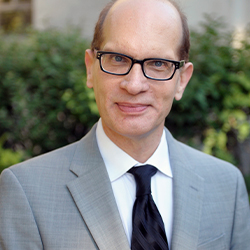
Guest conductor Jonathan Colby discusses Rodgers and Hammerstein’s Oklahoma!, from the revolutionary integration of dance and song to the complex interpersonal dynamics that birthed this Golden Age masterpiece. He also shares his perspective on navigating the show’s historical omissions and sensitive themes with Jacobs students, highlighting why this 1943 classic remains a vital study in flawed humanity and artistic escapism.
Synopsis and Notes
Rodgers and Hammerstein’s first collaboration remains, in many ways, their most groundbreaking—establishing the storytelling, musical, and dramatic standards that continue to shape musical theater today. Set in the Western Indian Territory at the turn of the twentieth century, Oklahoma! unfolds against the lively tensions between farmers and cowboys, whose rivalry forms the backdrop for a spirited and deeply human love story.
At its heart are Curly, a confident cowboy, and Laurey, an independent farm girl, whose romance is anything but simple. As pride, jealousy, and longing complicate their path, the journey toward love proves as unpredictable as a surrey ride down a country road. Around them, a community on the brink of change grapples with identity, belonging, and the promise of the future.
That Curly and Laurey will ultimately find their way to one another seems certain—but their union also mirrors something larger: the forging of a new life in a land about to become a new state. In Oklahoma!, personal and collective transformation come together in a story as vibrant, complex, and enduring as the American frontier itself.
Lauren O’Connor (Musicology M.A. Student)
There is hardly a more iconic songwriting duo than that of Rodgers and Hammerstein. Oklahoma! was the first of a long partnership that produced some of Broadway’s most famous musicals. Indeed, Oklahoma! has consistently caught the attention and captured the hearts of audiences since its premiere in 1943, first running for five years on Broadway, for three years on the West End, touring for nearly 10 years nonstop, and warranting a successful film version in 1955. Its small-town, “home grown” charm speaks to an idyllic past that first resonated with audiences with its wartime inception and continues to do so in the modern day. Before the duo became “Rodgers and Hammerstein,” Richard Rodgers (1902–79) collaborated with Lorenz Hart (1895–1942) on 26 Broadway shows and nine films between 1925 and 1943. Oscar Hammerstein’s (1896-1960) most notable work during that time was Show Boat (1927), which was produced in collaboration with Jeremy Kern. The two writers first met through mutual connections at Columbia University, but the path to production for Oklahoma! was not a simple one. Rather, it was a product of the complex inner workings of the theater business.
The Theatre Guild was an important repertory theater, established in 1918 in New York City, which produced both American and foreign plays before becoming highly regarded. In the 1930s, the Great Depression hurt the guild’s revenues, which was not helped by production decisions that led to some major flops. In 1935, George Gershwin and DuBose Heyward reworked the 1928 play Porgy into the now notable opera, Porgy and Bess, produced by the Theatre Guild. The opera proved artistically inspiring to many in the Theatre Guild’s circle yet was a limited financial success. Termed a “folk opera,” it set a precedent for the Theatre Guild to rework previously produced plays into musical versions.
Theresa Helburn—playwright, producer, and cofounder of the Theatre Guild— had been looking for a new hit production. She talked about her ambition for a type of music theater that welded together drama, music, and dance into something that would be neither a musical comedy nor an operetta. Successes like Porgy and Bess and Show Boat, which fit this description, inspired audiences looking to find the “American” music theater.
Helburn saw a potential libretto in a play the Theatre Guild had produced in 1931, Green Grow the Lilacs by Lynn Riggs, which had run for a respectable 64 shows. By 1942, Helburn began to talk seriously about a musical adaptation of the play, writing to Riggs that she believed “it will make a grand operetta—and should do for its locale what Show Boat and Porgy [and Bess] did for theirs.” Rodgers was invited to join the project, but Hart, struggling with alcoholism and depression, was becoming increasingly hard to work with. The precise details of Rodgers’ decision to partner with Hammerstein are somewhat fuzzy, but it is known that Hammerstein previously had made an agreement with Rodgers that if Hart were unable to work, he would step in as a collaborator. Hammerstein was already familiar with Riggs’ play when Rodgers finally approached him about the project over lunch, and when it was clear Hart was not interested in the project, Hammerstein immediately agreed.
The impacts of the Depression are clear in the themes of Green Grow the Lilacs, which takes on a distinctly darker tone than one discerns in Oklahoma!. Riggs was born in 1899 on a farm in the Oklahoma Territory, but later lived in Chicago, New York, and Los Angeles before returning to the University of Oklahoma. Green Grow the Lilacs, and many of his other plays, tackles the harsher aspects of life in the Oklahoma Territory. As Riggs describes in a 1928 letter to the Theatre Guild’s Barrett H. Clark, “And most of all—after sorrow, fear, hate, love—I can’t even begin to suggest something in Oklahoma I shall never be free of: that heavy, unbroken, unyielding, crusted day—morning bound to night—like a stretched tympanum overhead, under which one hungers dully, is lonely, weakly rebellious, and can think only clearly about the grave, and the slope to the grave.” Despite this, when referring to the play, he also writes that it is a play about “an era a little more golden than the present one.” Green Grow the Lilacs is perhaps suited for a musical adaptation because it is in its essence a very “musical” play, prominently featuring folk songs: the title of the play is itself a folk song. People still experience hardship in Lilacs, but the glow of nostalgia, the heartfelt remembrance of folk song, and the idealized past are always present.
The creation of myth can unite a community of people in a common identity, as Raymond Knapp discusses in his book, The American Musical and the Formation of National Identity. Just as Lilacs reflects its Great Depression roots, so too does Oklahoma! reflect its WWII premiere. At this time, America was in the midst of war, asserting itself as a world power, and finding its identity in a changing world. Oklahoma! is a celebration of frontier spirit and regular people “making do.” The pastoral setting suggests a more ideal past in relation to an imperfect present, thus creating a mythical landscape that invites nostalgia. In “Oh, What a Beautiful Mornin’,” Curly opens the show by describing the “bright golden haze on the meadow” and how “all the sounds of the Earth are like music.” This opening number immediately and perfectly describes the rural, picturesque setting. This song is a serene waltz with a simple melody reminiscent of a folksong. “Kansas City” also helps to establish the setting, albeit in a more humorous way than in the opening number; this comic song exaggerates the rural setting, setting up a certain charm in depicting a town that is lagging behind the rest of the country.
The community itself is another aspect of the musical’s myth making. Act II opens with the box social, and the song “The Farmer and the Cowman” playfully engages with the main conflict facing the community, between the farmers and the ranchers. This song hearkens back to an older song form, much like “Oh, What a Beautiful Mornin’.” At the end of the musical, the community comes together in celebration of the wedding between Laurey and Curly, and their territory’s impending statehood, ending with celebration of the togetherness and unity of a community.
Sticking together through hardship is a theme in the musical, and it is a message that resonated with audiences in the midst of WWII but also resonates with people now. Despite the difficulties that audiences faced in the Great Depression and in war, the simple, cheerful Oklahoma citizens fighting through hardships was something seen as quintessentially “American,” especially at a time where people were searching for a uniquely “American” musical theater and an identity on the world stage. But, on a smaller scale, we, as individuals, often seem to yearn for what we remember the past as being—the good ole’ days.
Artistic Staff
Born and raised in Middlesex, England, Jonathan Colby has been praised by the Cape Cod Times for conducting with “precision and vitality.” As president and artistic director of the Worcester Youth Orchestras (WYO), he conducts the 110-member Symphony Orchestra and oversees a comprehensive program of five orchestras, jazz, wind ensemble, and chamber music serving over 500 students. Recent WYO highlights include Mahler Symphony No. 1, Shostakovich Symphony No. 5, and Berlioz Symphonie Fantastique. He has toured with the orchestra to Germany, Austria, Czechia, Slovakia, Canada, and Great Britain. Colby has served as music director of the Farmington Valley Symphony Orchestra since 2014, appearing at the Bushnell, the Jorgensen Center and, most recently, with the Hartford Chorale for the Brahms Requiem and Saint-Saëns Symphony No. 3 at Christ Church Cathedral, Hartford. During his 15-season tenure at the College Light Opera Company (CLOC), Colby served for a decade as principal conductor and music director. His leadership earned critical acclaim, with the Cape Cod Times praising his “inspired” interpretations of both European operetta and American Golden Age classics. A notable scholar-performer, he reconstructed the scores to Jerome Kern’s Sally and Victor Herbert’s Naughty Marietta from the composers’ autographs at the Library of Congress and Smithsonian Institution. His time at CLOC included West Side Story, La Perichole, Die Fledermaus, The Student Prince, and company premieres of Benatzky’s Im weißen Rößl and Sullivan’s The Zoo. In demand as a guest conductor and clinician, he has conducted various New York State School Music Association, Connecticut Music Educators Association, MMEA, and American String Teachers Association festival orchestras, SUNY Purchase, New York City Opera Center, Commonwealth Lyric Opera, Nashoba Valley Chorale, Pioneer Valley Symphony Orchestra, Manchester Symphony Orchestra, and the Connecticut Symphony Orchestra. He is a member of the League of American Orchestras, where he serves on the board of directors for the Youth Orchestra Division.
Jacob Allen is a director and performer whose work bridges opera and musical theater with a focus on bold storytelling, musical precision, and actor-driven performance. He currently serves as chair of the Department of Theatre & Dance and director of the Rudi E. Scheidt School of Music at the University of Memphis. He is also associate artistic director of the Ohio Light Opera, a nationally recognized professional company in Wooster, Ohio, where he will assume the role of artistic director on August 1, 2026. His directing career spans a wide range of repertoire across opera and musical theater, with particular recognition as an interpreter of light opera and early American musical theater. His work in these traditions is marked by a commitment to stylistic integrity, musical storytelling, and the seamless integration of acting and singing. As a performer, he has appeared in a wide range of roles and is also featured as both a performer and director on numerous audio and video recordings with Albany Records and the American Operetta Foundation. A native of Oxford, Maine, Allen holds degrees from Lawrence University, the Eastman School of Music, and the University of Memphis. He has directed and performed extensively across the Midwest and New England and is passionate about training the next generation of artist-scholars in expressive, collaborative performance.
Jill Guyton Nee is a North Carolina-based contemporary choreographer and dance artist with a deep love for ballet and musical theater. Her work has been presented in Thailand and throughout the United States. Creatively, she has worked with several distinguished choreographers, including Mark Dendy, David Dorfman, Bebe Miller, Gaspard Louis, and Erin Carlisle Norton. She earned a B.A. in Dance and a B.S. in Business Management from Meredith College and worked full-time at the Americana Festival before attending The Ohio State University Department of Dance for an M.F.A. As a teaching artist, Nee served as the head of dance and an associate professor for the University of Memphis Department of Theatre and Dance for 10 years, taught at several college dance festivals, and choreographed in the private studio sector across the United States for more than two decades. She currently serves as adjunct for University of North Carolina at Chapel Hill and is a guest choreographer for North Carolina State University, as well as a core company member of Black Box Dance Theatre in Raleigh, North Carolina.
Steven C. Kemp is a set designer for opera, theater, and events. Originally from Houston, Texas, he earned an M.F.A. from the University of California San Diego. His previous IU Jacobs Opera Theater designs include Candide, West Side Story, The Music Man, Madama Butterfly, Oklahoma!, and Dead Man Walking. His over 150 designs for opera have been presented at 40 companies, including the Atlanta Opera, Seattle Opera, Arizona Opera, Lyric Opera of Kansas City, Opera Theatre of Saint Louis, Sarasota Opera, Utah Opera, Central City Opera, Chicago Opera Theater, Des Moines Metro Opera, Florida Grand Opera, Hawaii Opera Theatre, Kentucky Opera, New Orleans Opera, Opera Omaha, Opera Santa Barbara, Pittsburgh Opera, Portland Opera, Curtis Institute of Music, and the San Francisco Conservatory of Music. His 30 designs for Opera San José across 14 seasons include the West Coast premieres of Anna Karenina and Silent Night as well as the acclaimed productions of Idomeneo and Alma Deutscher’s Cinderella. His design for Candide, originally presented at Des Moines Metro Opera, won honorable mention at the 2021 Golden Trezzini Awards for Architecture and Design. His design for Falstaff was selected as a finalist in the World Stage Design 2017 exhibit in Taipei, Taiwan. He has designed over 50 productions in New York City, including the current Off-Broadway world-premiere musical All the World’s a Stage and the revivals of Tick, Tick . . . Boom! and Ordinary Days. He has designed on the West End as well as numerous productions for regional theaters, cruise ships, and international tours, such as the current Sesame Street Live!, Peppa Pig Live!, Blippi: The Wonderful World Tour, and Baby Shark Live!. Early in his career, he worked extensively as an associate designer, including designs for 10 Broadway productions, national tours, Holland America Line, Norwegian Cruise Line, Disney Theatricals, Dreamworks, and the Metropolitan Opera.
Linda Pisano designs for many theater, dance, musical theater, ballet, and opera companies throughout the United States; her ballet designs have toured the United Kingdom and Canada. An award-winning designer, she was selected to represent the United States in costume design in the World Stage Design Exhibition in Taipei. Her work has been twice selected for feature in the Quadrennial World Exhibition in Prague, and she is a three-time winner of the National Stage Expo for performance design and a four-time recipient of the Peggy Ezekiel Award for Excellence in Design. Her work was selected from top designers in the United States to be featured and published in the “Costumes of the Turn of the Century” exhibition with the Bakhrushin Museum in Moscow and the China Institute of Stage Design in Beijing. As professor of costume design at Indiana University, she’s also directed a study abroad program in London since 2004, is department chair, and produces IU’s Summer Theatre. She is coauthor of the recent books Art of the Character: Highlights from the Glenn Close Costume Collection and The Art and Practice of Costume Design. Some of her favorite projects include The Daughter of the Regiment, Anne Frank, Salome (with Patricia Racette), To Kill a Mockingbird, Romeo and Juliet, Sense and Sensibility, Chicago, Madama Butterfly, The Tragedy of Doctor Faustus, A Little Night Music, and the opera Akhnaten. She served two terms as an elected member of the board of directors for the United States Institute for Theatre Technology and is a member of United Scenic Artists, Local 829.
Blake Kile’s work spans theater, dance, concerts, and corporate events, with designs seen across the country. He earned an M.F.A. from Columbia University.
After graduating from the Jacobs School of Music with an associate’s degree in audio technology, Aaron Beck toured the United States with multiple Broadway national tours, including Jolson the Musical, The Buddy Holly Story, Mamma Mia, Disney’s Beauty and the Beast, and both touring companies of Disney’s The Lion King. After 10 years of touring, Beck moved to Las Vegas, where he has worked on productions of The Beatles Love, Viva Elvis, and Michael Jackson One for Cirque du Soleil. Over the past seven years, Beck has sold and installed audio systems into some of the largest venues in the world, including the San Diego Symphony, Resorts World Theatre, Sphere Las Vegas, and Sight & Sound Theatres. He spends his summers working with the Bluecoats Drum and Bugle Corps. He lives in Las Vegas with his wife, two children, and their three dogs.
Walter Huff is professor emeritus of choral conducting at the Jacobs School of Music. He served as chorus master for at The Atlanta Opera for more than two decades, leading the renowned ensemble in more than 125 productions, with critical acclaim in the United States and abroad. He earned a Bachelor of Music degree from the Oberlin Conservatory and a Master of Music degree from Peabody Conservatory. After serving as a fellow at Tanglewood Music Center, he received Tanglewood’s C. D. Jackson Master Award for Excellence. Huff served as coach with the Peabody Opera Theatre and Washington Opera and has been musical director for The Atlanta Opera Studio and Georgia State University Opera. He also has worked as chorus master with San Diego Opera. He served on the faculty at Georgia State University for four years as assistant professor, guest lecturer, and conductor for the Georgia State University Choral Society. He has served as chorus master for many IU Jacobs School of Music Opera and Ballet Theater productions, including L’Étoile, Lucia di Lammermoor, West Side Story, The (R)evolution of Steve Jobs, Bernstein’s Mass, Parsifal, La Traviata, La Bohème, The Magic Flute, Falstaff, Highway 1, USA, La Rondine, H.M.S. Pinafore, Ainadamar, Anne Frank, Candide, The Merry Widow, Eugene Onegin, and Sweeney Todd. For five years, Huff served as choral instructor/conductor for the Jacobs School’s Sacred Music Intensive. He conducted the Jacobs Summer Music series presentations of Honegger’s King David, Paulus’s The Three Hermits, and The World of William Billings. This past summer, he returned for his seventh year as faculty coach at Ravinia Festival’s Steans Music Institute and in 2024, made his debut as guest chorus director with the Chicago Symphony Chorus in concert performances of Mozart’s Idomeneo with the Chicago Symphony Orchestra (James Conlon, conductor). This season, Huff continues to serve as principal guest coach for The Atlanta Opera Studio Artists Program and will be guest chorus master for The Atlanta Opera’s Götterdämmerung in 2026.
Drew Bryson (he/they) is an Indianapolis native best known for appearing on RuPaul’s Drag Race (Emmy) and RuPaul’s Drag Race All Stars (Emmy Nom). They were recently seen in the U.S. regional premiere of Everybody’s Talking About Jamie (Jamie New). Bryson began his career in theatrical wig work in Indianapolis in 2014. Credits both on and offstage include Broadway: Book of Mormon, Phantom of the Opera, Some Like it Hot; Broadway in Concert: The 20th-Anniversary Broadway World Concert; Off Broadway: Kinky Boots; National Tour: Anastasia, Hairspray, Waitress; Regional: The Prom, Elf the Musical, Romeo and Juliet, Kinky Boots, White Christmas, Pride and Prejudice, Curious Incident . . . , Joseph . . . Dreamcoat, Legally Blonde, Something Rotten; Cabaret: Legally Blair; Film: Bittersweet (Amazon Prime); Albums: Call My Life (Billboard No. 1, 2018), Identity (Billboard Top-10 Single, 2020).
Cast
Evan Woods Gunter, baritone, is a native of Birmingham, Alabama, pursuing a Doctor of Music in Voice Performance degree with a certificate in Vocology at the Jacobs School of Music, where he studies with Brian Horne. At Jacobs, he has recently appeared as L’horloge comtoise in L’Enfant et les Sortilèges and Moralès in Carmen. Additional operatic credits include Guglielmo in Così fan tutte and Moralès and El Dancaïro in Carmen at the University of Florida; Figaro in The Marriage of Figaro, King Melchior in Amahl and the Night Visitors, the Pirate King in The Pirates of Penzance, and Gabey in On the Town at Samford University; and Giuseppe Palmieri in The Gondoliers with the College Light Opera Company. In addition to his operatic work, Gunter has an extensive background in professional musical theater. A member of Actors’ Equity Association, he spent several years living in New York City and performing across the United States before beginning his graduate studies. Notable roles include the Beast in Beauty and the Beast (The Little Theatre on the Square), Robert in The Drowsy Chaperone (Maples Repertory Theatre), Rapunzel’s Prince in Into the Woods (Red Mountain Theatre Company), Marius in Les Misérables (Wallace Hall Fine Arts), and Quale in South Pacific (The REV). He holds a Bachelor of Music degree from Samford University and a Master of Music degree from the University of Florida.
Ohio native William Nicholson, baritone, is a first-year master’s student pursuing a Master of Music in Voice Performance at the Jacobs School of Music with Jane Dutton. He received his Bachelor of Music from Baldwin Wallace University in Berea, Ohio, where he studied with JR Fralick. Oklahoma! marks Nicholson’s onstage debut at the Musical Arts Center. At the Jacobs School, he recently appeared with the University Singers and as a member of the chorus in November’s production of La Bohème. During his undergraduate studies at Baldwin Wallace, he performed the roles of Jupiter in Orpheus in the Underworld, Danilo Danilovich in The Merry Widow, and Perseus in Nkeiru Okoye’s We’ve Got Our Eye on You. Nicholson performed in the United Kingdom on the concert tour Let My Song Fill Your Heart and participated twice in the Bel Canto in Tuscany program, performing throughout Italy.
From Moorestown, New Jersey, soprano Julianna Banfe is a third-year undergraduate student pursuing a Bachelor of Music in Voice Performance with Paulina Villarreal. She was most recently seen with IU Jacobs Opera Theater as Un Pâtre and in the opera chorus of Ravel’s L’Enfant et les Sortilèges and has performed with IU ensembles including NOTUS, the Oratorio Chorus, and Conductors Chorus. Banfe made her role debut last summer as Celia in Handel’s Silla with Chicago Summer Opera. She is also the cofounder and co-music director of the all-treble a cappella ensemble The Bloomingtones. This summer, she will join the Hawaii Performing Arts Festival as Carrie Pipperidge in Rodgers and Hammerstein’s Carousel, continuing her work in Golden Age repertoire alongside her operatic training.
Mezzo-soprano Paulina Baron, from Mount Laurel, New Jersey, is a third-year undergraduate student in the Jacobs School of Music pursuing a Bachelor of Music in Voice Performance and a Bachelor of Music Education degree with a choral focus. She studies under the tutelage of mezzo-soprano Tichina Vaughn. In addition to her classical work, Baron pursues secondary jazz and commercial voice lessons with Rachel Caswell, where she enjoys furthering her technical and stylistic versatility. She also has an extensive background in community musical theater, her favorite role being Audrey in Little Shop of Horrors. Baron has appeared in a variety of vocal and choral performances at Indiana University, including the IU Jacobs Opera Theater chorus of Mozart’s Le Nozze di Figaro, the Oratorio Chorus in Mahler’s Symphony No. 2, and the University Chorale in Vaughan Williams’ Dona nobis pacem. She made her Carnegie Hall debut in 2020 with the Honors Performance Series Treble Chorus under the direction of Timothy Seelig. In the summer of 2025, Baron studied abroad in the opera program of the American Institute of Musical Studies in Graz, Austria, where she was coached by Zachary Coates and Piotr Wiśniewski. This is her role debut with IU Jacobs Opera Theater.
Tenor Andy Boggs is a second-year master’s student originally from Odenton, Maryland, studying under the tutelage of Brian Horne. This summer, he looks forward to playing Anthony Hope (Sweeney Todd) in a collaboration between Opera Memphis and Playhouse on the Square. During IU Jacobs Opera Theater’s 2024-25 season, he played Peter Quint (The Turn of the Screw) and Alfred (Die Fledermaus). He also played Gonzalve (L’heure espagnole), Aeneas (Dido and Aeneas), and Dr. Caius (Falstaff) in the Jacobs School scenes program. Past roles he has enjoyed are Don Ottavio (Don Giovanni), Tamino (Die Zauberflöte), and Ralph Rackstraw (H.M.S. Pinafore). Because of his performances as Ralph Rackstraw (H.M.S. Pinafore), he was honored with being a finalist for Best Performer in a Musical in the BroadwayWorld Washington, D.C. Awards. As a concert soloist, Boggs has performed as the tenor soloist in works such as Handel’s Messiah, Ives’ The Celestial Country, Purcell’s Welcome to All the Pleasures, and Bach’s Es reißet euch ein schrecklich Ende, among others. He graduated with a B.M. in Vocal Performance from the University of Maryland, studying under Gran Wilson.
Tenor Jeremiah Angel, from Evansville, Indiana, is in his second year of a Master of Music in Voice Performance degree, studying under Kelly Markgraf. He has also studied with Timothy Noble and Gregory Rike. He holds dual bachelor’s degrees in music education and music performance from the University of Evansville Music Conservatory, where he appeared as Toby in The Medium and performed in notable concert performances of Vaughan Williams’ On Wenlock Edge and Britten’s Canticle II: Abraham and Isaac. While at Jacobs, he has performed as La Thérière in L’Enfant et les Sortiléges and in the opera chorus of Carmen and is currently performing with NOTUS, IU’s contemporary vocal ensemble.
Bass-baritone Andrew Ives hails from Crown Point, Indiana, and is making his IU Jacobs Opera Theater debut in this role. He is a second-year B.M. student under the tutelage of Kelly Markgraf. Last year, he took part in the University Chorale’s performance of Mahler’s Symphony No. 2
Xavier Perry is a first-year M.M. student in voice performance from Pittsburgh, Pennsylvania. He received his bachelor’s degree from the University of Michigan. His previous credits include chorus in last semester’s La Bohème, chorus in IU’s orchestral workshop of In the Rush in collaboration with the Metropolitan Opera, and Don Alfonso (Così fan tutte) and Simone (Gianni Schicchi) at the University of Michigan. He currently studies with Heidi Grant Murphy.
Mezzo-soprano Harper Knopp, from Plainfield, Indiana, is a senior pursuing a B.S.O.F in Voice Performance and Law and Public Policy, studying under the tutelage of Michelle DeYoung. This production marks her role debut with IU Jacobs Opera Theater. At IU, Knopp has recently appeared as the mezzo-soprano soloist in Haydn’s Theresienmesse with Jacobs’ University Chorale and as Jane Doe in Richmond and Maxwell’s Ride the Cyclone. She recently performed in the chorus of Mozart’s The Marriage of Figaro with IU Jacobs Opera Theater as well as with NOTUS, Conductor’s Chorus, and University Chorale. Knopp has performed domestically and internationally, making her European debut last summer at VIMA, appearing as La Ciesca and La Zelatrice in Puccini’s Gianni Schicchi and Suor Angelica, as well as portraying Alyson in A Grand Night for Singing. Other credits include The Sound of Music (Elsa Schraeder), Sweeney Todd (Ensemble/Anthony U/S), and opera scenes at IU as Dorabella (Così fan tutte) and Orlofsky (Die Fledermaus). Upcoming, she will perform as Romeo from Bellini’s I Capuleti e i Montecchi this spring in Michael Shell’s Opera Workshop.
Ruby Miller is a soprano originally from Floyds Knobs, Indiana. She is currently a junior studying under the tutelage of Michelle DeYoung. Miller has worked with the Kentucky Opera both as the Third Spirit in Die Zauberflöte and in the children’s chorus of Carmen. She also played Susanna in The Marriage of Figaro for Opera Lucca. At IU, she made her role debut as Flora in The Turn of the Screw and has also been featured in the opera choruses of L’Enfant et les Sortilèges and Suor Angelica.
Leah Gray is a mezzo-soprano from Cincinnati, Ohio, currently pursuing a Performer Diploma under the tutelage of Alice Hopper. She earned an M.M. in Voice Performance last year at Jacobs. Oklahoma! marks her mainstage role debut at Jacobs, but she has been part of several opera productions in the chorus here, including La Bohème, Carmen, The Amazing Adventures of Kavalier & Clay, and Eugene Onegin. Additionally at Jacobs, Gray has sung in Carol Vaness and Zachary Coates’s Opera Workshop, performing the roles of Concepción in L’heure espagnole and excerpts as Florence in Albert Herring and Old Prioress in Dialogues of the Carmelites. She holds a Bachelor of Music degree from Purchase College, State University of New York, where she performed as Madame de la Haltière (Cendrillon), Die Dritte Dame (Die Zauberflöte), and Mother (Amahl and the Night Visitors). Other credits include Zita and La Ciesca (Gianni Schicchi) and Mother (The Consul).
Mezzo-soprano Lauren Smedberg, from Lake Mary, Florida, is a third-year graduate student soon to be graduating with a Master of Music in Voice Performance and a Certificate in Vocology, studying with Brian Gill. This is her principal role debut with IU Jacobs Opera Theater. Previous performances with IU Jacobs Opera include chorus roles in Ravel’s L’Enfant et les Sortilèges, Bizet’s Carmen, and Bates’s The Amazing Adventures of Kavalier & Clay, IU’s coproduction with the Metropolitan Opera.
Preston Rogers is a baritone earning a Master of Music in Voice Performance with Paulina Villarreal. His performance experience covers a wide array of repertoire from Baroque opera to world premieres. Notable opera roles performed include Count in The Marriage of Figaro, Don Alfonso in Così fan tutte, Somnus in Semele, King Balthazar in Amahl and the Night Visitors, Pistola in Falstaff, Betto in Gianni Schicchi, and Argippo in Cavalli’s Erismena. In the concert hall, he has performed various Bach cantatas as well as the baritone solos in Fauré’s Requiem, Duruflé’s Requiem, and Ives’ The Celestial Country. A passionate advocate for new music, Rogers has performed world premieres of contemporary opera, oratorio, choral works, and art songs. He earned a Bachelor of Music at Vanderbilt University, where he studied with Tyler Nelson. Rogers is from Franklin, Tennessee, just south of Nashville.
Benjamin Plunkett is from Indianapolis, Indiana, and in his first year of the Master of Voice Performance program, studying under Brian Gill. He completed his Bachelor of Music in Voice at Jacobs and has performed in nine other IU Jacobs Opera Theater productions, including the choruses of Parsifal and The (R)evolution of Steve Jobs. This is his second role at IU; his first was in Leonard Bernstein’s Mass as a Street Singer.
Tenor Joshua DeGroot hails from Columbus, Indiana, and is in his final semester as a graduate student pursuing a Master of Music in Voice Performance. He graduated from Jacobs in 2024 with a bachelor’s degree in voice performance under the tutelage of Timothy Noble. He made his principal debut at IU in 2023 as Baron Mirko Zeta in The Merry Widow. DeGroot has also been part of several opera choruses, including Don Giovanni, Sweeney Todd, and Candide, in the role of the Baron. Since he has been in graduate school, he has performed with IU Jacobs Opera Theater several times, including as Dr. Blind in Der Fledermaus and in the choruses of Carmen, La Bohème, and the world premiere of The Amazing Adventures of Kavalier & Clay. Throughout his time at IU, DeGroot has actively participated in various performances with the University Gilbert & Sullivan Society. His involvement extends to multiple choirs, including the IU Opera Chorus, University Chorale, and Singing Hoosiers. He currently studies under Peter Volpe.
Gannon Hays is a first-year master’s student from Moorpark, California. He studies with renowned tenor Russell Thomas, and this is his first principal role with IU Jacobs Opera Theater. Last semester, he appeared in the chorus of Jacobs’ production of Ravel’s L’Enfant et les Sortileges. As an undergraduate at Pepperdine University, he appeared in several roles, including Papageno in Mozart’s Die Zauberflöte, Sir Joseph in Gilbert and Sullivan’s H.M.S. Pinafore, and Baron Zeta in Lehár’s The Merry Widow.
101 North Eagleson Avenue Bloomington, IN 47405 Monday–Friday | 11:30 a.m.–5:30 p.m. Box office hours are subject to change during events and holidays.
Group Sales
Discounted rates are available for groups of 10 or more. Call us at 812-855-0021 for details.